
What Does Liability Mean in Legal Terms? | Understanding Legal Responsibility
Learn what “liability” means in legal terms, how courts determine legal responsibility, and how liability applies in real disputes. This plain-English guide explains the definition of liability, examples of negligence-based claims, and how fault is evaluated in civil law.
JASON KIM, esq.
12/19/20253 min read
Introduction
The word liability appears everywhere—insurance letters, contracts, accident reports, lawsuits, and news articles. People often hear phrases like “who is liable” or “liability was disputed” without a clear understanding of what the term actually means.
This article explains what liability means in legal terms, how it differs from fault or blame, and how liability is generally analyzed in civil disputes.
What Is Liability?
In general terms, liability refers to legal responsibility.
When someone is said to be “liable,” it means the law recognizes responsibility for harm, loss, or obligation under defined legal rules. Liability does not depend on opinions, fairness, or moral judgment—it depends on whether legal standards are met.
Liability is about legal responsibility, not personal blame.
Liability vs. Fault: Not the Same Thing
People often use fault and liability interchangeably, but they are not identical.
Fault refers to conduct—what someone did or failed to do
Liability refers to legal responsibility under the law
A person can be involved in an incident without being legally liable. Conversely, a person may be legally liable even if they did not intend to cause harm.
Courts determine liability by applying legal standards, not by assigning moral judgment.
Common Types of Liability
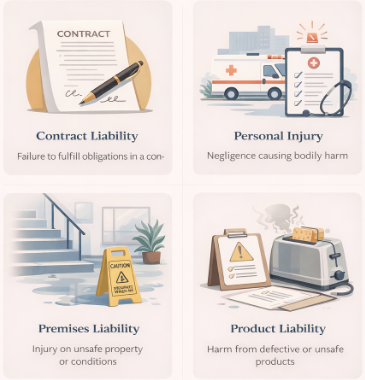
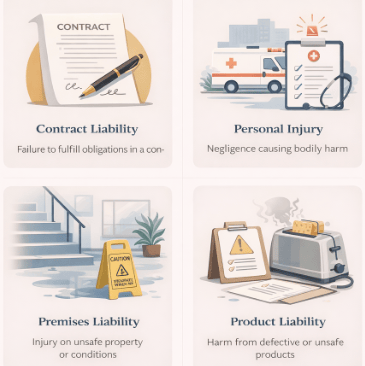
Liability arises in different ways depending on the legal context. Some of the most common types include:
Contractual liability arises from agreements. If a party fails to perform obligations required by a contract, liability may result—even if no physical harm occurred.
Negligence liability arises when someone fails to exercise reasonable care, and that failure causes harm. This is one of the most common bases for liability in civil lawsuits.
In limited situations, liability may exist without fault. This is known as strict liability and typically applies in specific contexts defined by law.


How Courts Determine Liability
Courts do not decide liability based on feelings or assumptions. Instead, they analyze whether legal elements have been satisfied.
Depending on the type of claim, courts may examine:
Whether a legal duty existed
Whether that duty was breached
Whether the breach caused harm
Whether legally recognized damages resulted
If required elements are not proven, liability does not attach—even if harm occurred.
Liability is established through legal standards, not outcomes alone.
Shared and Comparative Liability
In many cases, liability is not all-or-nothing.
Some legal systems allow responsibility to be shared among multiple parties. This means more than one person or entity may bear a portion of legal responsibility depending on their respective roles.
Shared liability recognizes that real-world events often involve multiple contributing factors.


Liability Does Not Automatically Mean Payment
Being found liable does not always result in immediate payment or financial recovery. Liability is one step in a broader legal process that may involve:
Additional legal rulings
Insurance considerations
Settlement discussions
Appeals
Liability establishes responsibility; remedies determine consequences.
Why Liability Is Often Disputed
Liability is frequently contested because it turns on:
Facts
Evidence
Credibility
Legal interpretation
Reasonable people—and lawyers—can disagree about whether legal standards have been met. This is why liability is often the central issue in civil litigation.


Common Misconceptions About Liability
Several misconceptions frequently arise:
“If harm occurred, someone must be liable.”
Not necessarily. Harm alone does not establish liability.“Liability means someone acted intentionally.”
Intent is not required in many forms of liability.“Being involved means being liable.”
Legal responsibility depends on defined legal elements, not mere involvement.
Understanding these distinctions helps clarify how legal responsibility is actually determined.
Closing Thoughts
Liability is a legal concept that defines responsibility under specific rules and standards. It is not about moral judgment, intent, or fairness—it is about whether legal requirements are satisfied.
A general understanding of what liability means can make legal disputes feel less confusing and help explain why responsibility is often debated rather than assumed.
Contact
jkim@jkimlaw.com
(903) 908-4140
© 2025. All rights reserved.
Phone